There's a wonderful scene in The Pursuit for Happyness, where Chris (Will Smith) is asked by an interviewer:
What would you say if a guy walked in for an interview without a shirt on and I hired him? What would you say?
Chris: He must've had on some really nice pants.
Wearing the right attire for job interviews shows you understand the nature of the business and you are familiar with the dress code of that field, thus increasing your chances of getting the job. Business fields such as accounting, banking, client servicing, consulting and law require formal attire, whereas creative industries like advertising and technology are more flexible when it comes to the dress code.
All about shirts and trousers
Clothes can make an impression and the right kind, if you just pay a little attention to your wardrobe. HR professionals say that a candidate's attire could actually make or break their chance of getting selected.
Since how you look is important, stick to the simple rules of dressing that you learnt in school. In other words, dress up conservatively, and you can't go wrong. Wear single colour shirts. Stripes on shirts look good, but they shouldn't be too bold or too thin and too close to each other.
A white shirt is a popular choice, but even a pink or a pistachio coloured shirt is perfectly acceptable as business formals. And a pair of plain cuff-links with an inconspicuous design gives it a touch of sophistication.
The length of the trousers should be just right, it should fall well and not bunch up at the bottom. Tapering trousers are in vogue, but make sure that it doesn't taper to the extent of hugging your calves and ankles. Dark blue and solid grey go well with most shirts. Avoid self-print or striped trousers. And the suit should match your trousers.
If you want to try out different coat colours don't sway beyond charcoal grey, dark blue, brown or fawn. A black suit looks too formal and is less appropriate for job interviews. The sleeves of the suit jacket should not cover that of the shirt completely. About half an inch of the shirt's sleeves should be seen.
While it is not entirely necessary to mention this, we will: avoid jeans or denims for interviews.
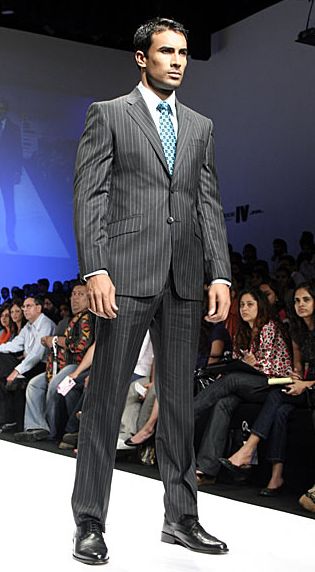
Now comes the knotty part. The double-knot tie is the right size to wear. Remember the way you tied the knot in school and the principal nodded agreeably? Yes, keep that in mind. A larger tie knot can give you a more confident look while a symmetric one looks elegant. As the four-in-hand is a small and asymmetric tie knot, it is less preferred however, President Barack Obama wore a woven silk necktie with a four-in-hand knot with a large dimple on inauguration day.
Choose a tie knot that fits the collar opening of the shirt. For example, a small tie knot like the four-in-hand suits shirts with a narrow collar opening, while a large tie knot like the Windsor suits shirts with a wide collar opening.
As for the ideal length of your tie, the tip of the wider end should be at the same level as your belt. And be wise in deciding the colour of the ties. Ties in dark colours are preferred. For example, dark blue and dark red. Needless to say the tie should be coordinated with your shirt. The pattern and colour should not distract the recruiter. So no large polka dots or bold, shiny patterns or pictures; it should look formal. Silk ties are a good choice.
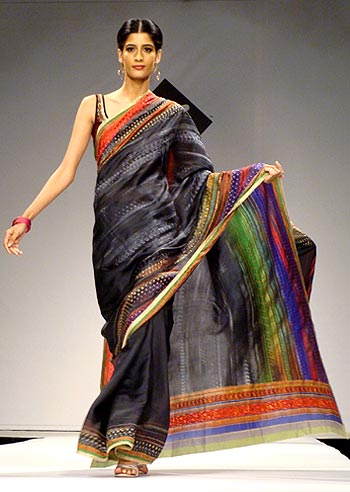
Depending on the position you have applied for and the industry, a cotton sari can be a good choice for an interview. A nicely pinned up cotton sari looks elegant when paired with a conservative cotton blouse (half sleeves, preferably). Sari is a good choice for the tourism, hospitality and aviation sectors.
While salwar suits do look elegant, managing the stole can be a task, unless it's of a material that stays and you don't have to keep adjusting it. A kurti and salwar is, in fact, a better option. Since there's no stole with it, with the right pattern and colour, it can look formal and business-like. But no heavy sequins or embroidery!
Traditional nose pins are acceptable, provided they are small and pretty. As for necklaces and earrings, small is beautiful and smart.
Western outfits are a safe choice
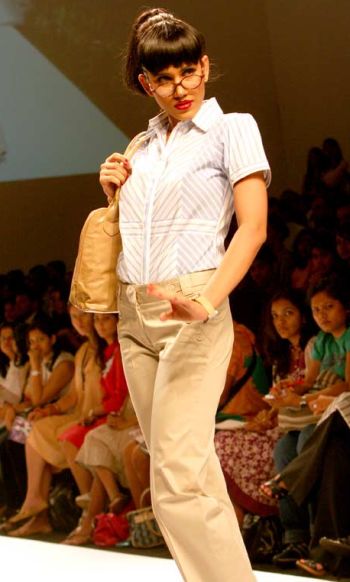
However, for most sectors western-wear is the perfect choice. A formal shirt and trousers, and low-heeled pumps, preferably black, or any dark colour -- no purple, please -- would go well. And if your pumps are peep-toes then please pedicure your nails. If you want to paint them, only light colours.
In case you plan to wear a skirt, then it should be a formal, well-fitted, black or grey skirt that reaches below the knees. With a formal skirt, stockings are a must. No fishnet stockings but plain, skin coloured ones. They look graceful.

Gentlemen, if you are wearing a black belt then match it with black shoes, a brown belt with brown shoes. Recruiting companies say it's a good idea to match the shoes or the belts with the colour of the spectacles, handbag or briefcase. So keep that in mind, as well.
We all know that shoes should be polished. Black is a safe colour, and no pointed, long shoes. And ladies: no fancy heels, stilettos and bright colours.
Women could wear a medium width belt with formal trousers for a neat look. Choose a plain black belt, and resist fancy buckles. Make-up could be kept to a minimum. Lipstick: light pink or brown. Both matte and gloss are fine but avoid the glittery variety.
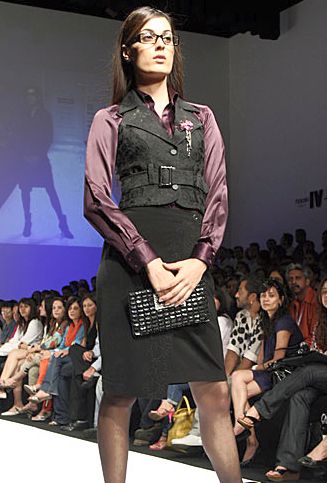
Nothing looks neater than a short haircut (for the men). Gel your hair to avoid any stray hair sticking out, but do not overdo it or back comb your hair as it will send out the wrong message.
Women could wear their hair in a bun, neatly held in pins or a plain black scrunchy. A high, top bun will look right for the aviation sector. If you wish to wear your hair open, then blow-dry and set it. When you comb or brush your hair, please brush the stray strands off your shirts or tops. In case there's a dandruff problem, take care of it -- white flakes on a dark suit is not a good idea.
As for bulging pockets, body-piercing, tattoos, low-waist trousers and male jewellery -- common sense would say avoid it, please. One gem stone ring is fine too many might show you in a different light.
And one last piece of advice: don't drench yourself in cologne or deodorant. It can give your recruiter a headache the moment you enter. A gentle spray is enough.

 © 2025 Rediff.com - Investor Information - Advertise with us - Disclaimer - Privacy Policy - Feedback - About us - Terms of use - Grievances